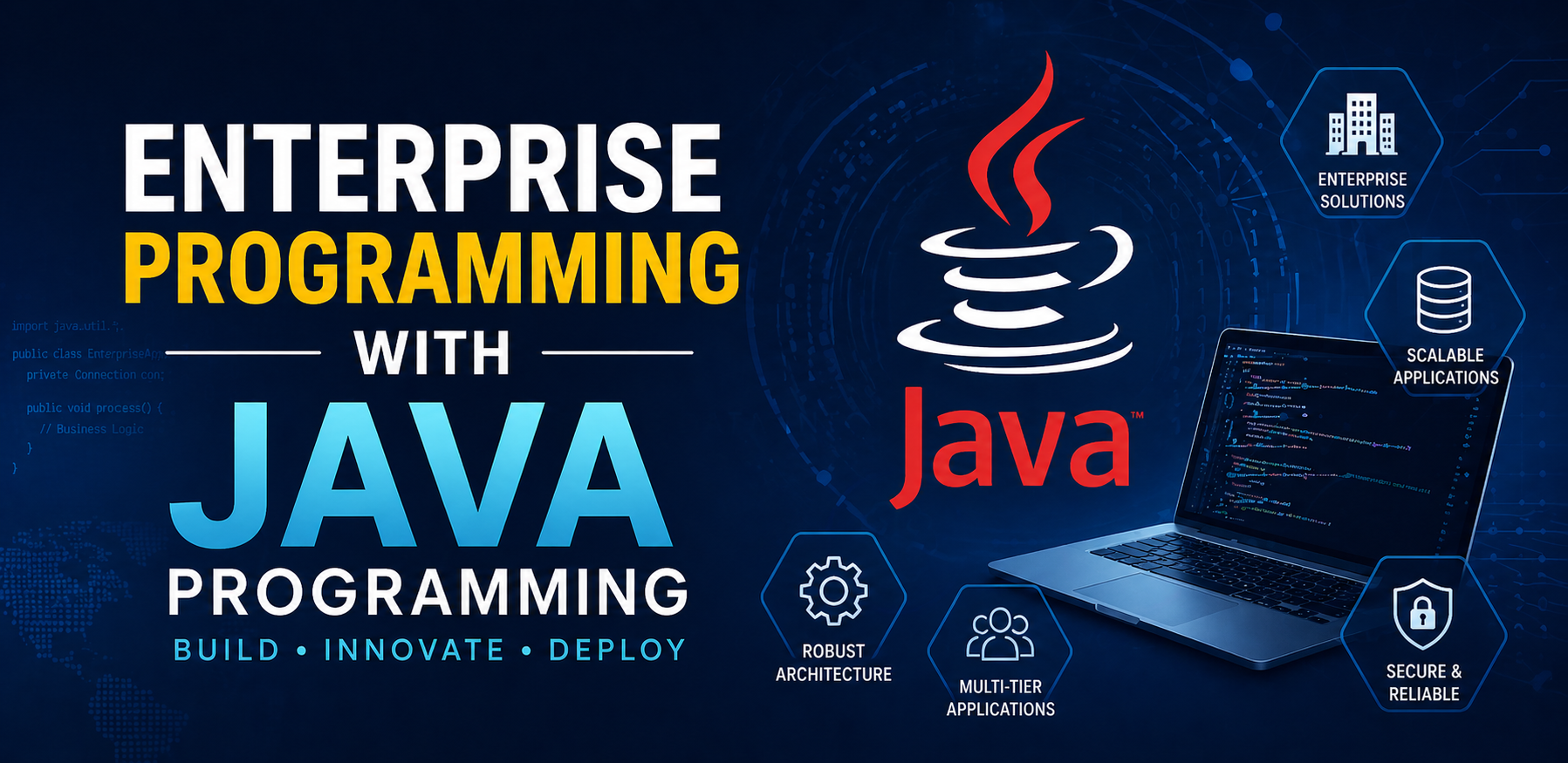
Enterprise Programming with Java

Application through the use of effective Backend Development, Multi-Tier Architecture, and Deployment Strategies for Java Technologies.

Data Science

Experience the possibilities of data science such as Machine Learning, data analysis and information generation!

Full Stack Development with Node JS

Become a master in full stack development with usage of Node.js, Express and modern front-end technologies to develop high-performance scalable applications from back end to front end.

Access Material and Lab Manuals

At your fingertips, you can have access to a world of study materials and laboratory manuals to make studying more accessible, structured, and available for you 24/7, anytime and anywhere.

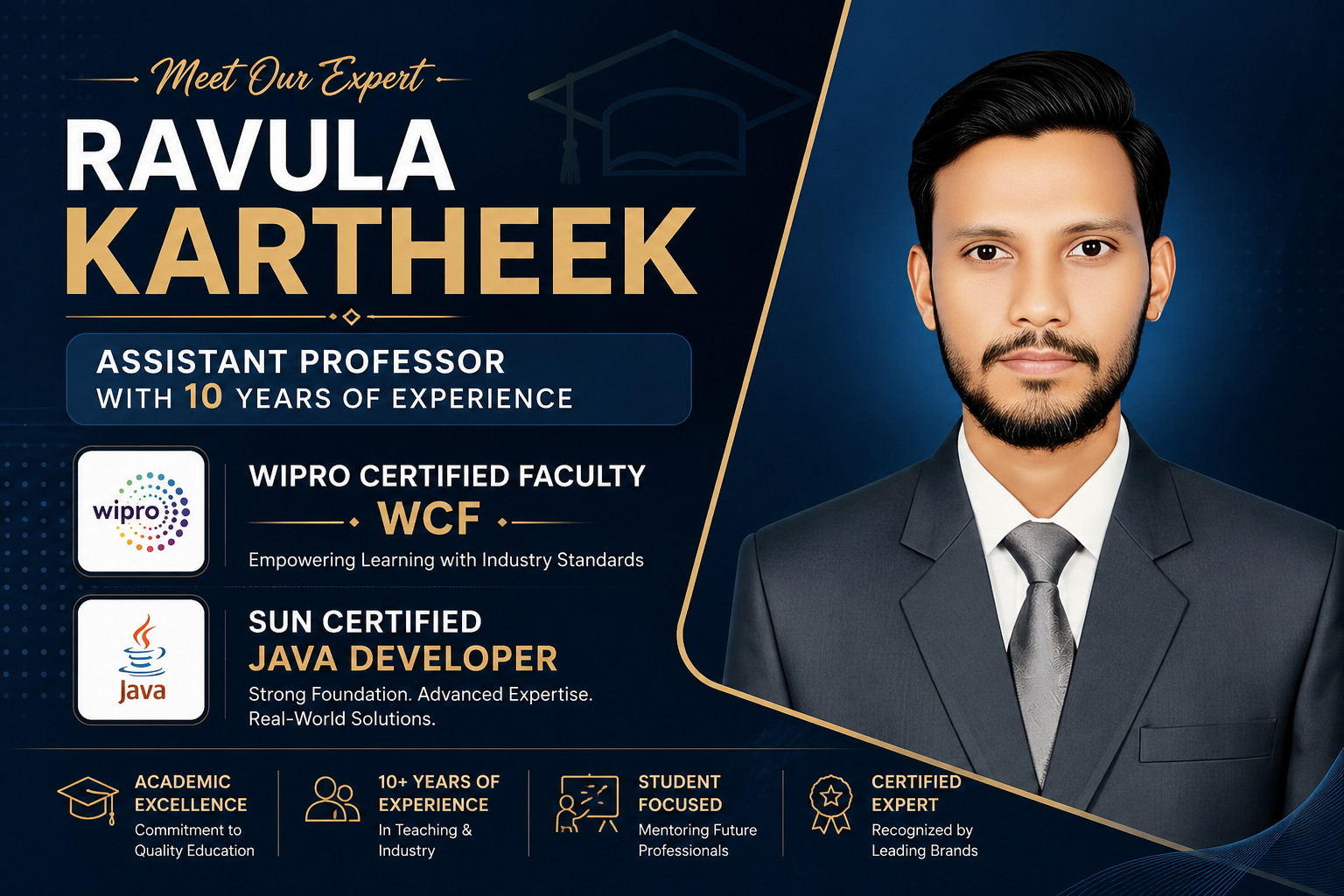
Ravula Kartheek

Assistant Professor with 10 years of experience. Wipro Certified Faculty (WCF) and Sun Certified Java Developer with strong expertise in enterprise and full stack technologies.

Data Structures 2-1 B.Tech Handwritten Notes

📘 Data Structures (DS) – 2-1 B.Tech Handwritten Notes (Unit 1 to 4)

Your search for Data Structure (DS) - 2-1 B.Tech handwritten notes are finally over! All Unit 1 to Unit 4 material will be here in one location for you to easily access.

There are excellent for:

  • Preparing for semester exams
  • Assignments and record work
  • Revising the most critical topics
  • Quickly understanding the concept of DS
  • The following units are included:

- Unit 1 - Basics of Data Structures

- Unit 2 - Stacks, Queues, and Linked Lists

- Unit 3 - Trees and Graphs

- Unit 4 - Searching and Sorting Algorithms


💡 I hope these DS notes help you in your preparation.
If you found this useful, please follow my blog and share it with your friends. 😊

DAA Notes PDF – Download All Units

📘 Design and Analysis of Algorithms (DAA) Notes – PDF (Unit 1 to 4)

DAA (Design and Analysis of Algorithms) is an important topic in CSE/IT field which has a huge volume of study material and notes available for students. If you’re a CSE/IT student looking for DAA notes, then you came to the right place! With just a couple of clicks, you’ll be able to preview and download all your study materials in PDF format for units 1 through 4 of this subject.

All DAA study materials listed on this website are simple, clear, and prepared with an exam focus — you’ll be able to use them as you study for exams, assignments, and viva! 

👍 What You Will Get

- Unit-wise DAA notes

- Easy-to-read descriptions

- Key exam-related topics included

- Preview and direct download links are provided for all units.

📥 Units Covered

1. Unit 1 - Introduction to Algorithms

2. Unit 2 - Divide and Conquer

3. Unit 3 - Greedy Method

4. Unit 4 - Dynamic Programming


💡 I hope these DAA notes help you in your preparation.
If you found this helpful, please follow my blog and share it with your friends. 😊

Object Oriented Programming (OOP) Previous Year Question Papers (2021–2025) – Download PDF

Object Oriented Programming (OOP) Previous Year Question Papers PDF (2021–2025)

Are you prepping for your Object Oriented Programming (OOP) exam and have no idea where to find good resources? Here is a place that lets you download OOP Previous Year Question Papers from academic years 2021, 2022, 2023, 2024, and 2025 as high-quality PDFs! Great for all students in BCA, B.Tech, BSc CS, MCA, and every other computer science programme in higher education.

Studying OOP PYQs answers the following questions: What is the exam pattern of my OOP exam? How to best manage my time on test day? Am I ready for the OOP exam?

Whether preparing for internal assessments or semester finals, using OOP Previous Year Question Papers will ensure you get an ample grasp of topics covered throughout the course and recent question trends that could help increase your score at the end of the term.

⭐Why You Should Work on OOP PYQs

  1. Answering OOP Previous Year Question Papers will help you to:
  2. Develop familiarity with the types of questions you will find on the exam
  3. Increase speed and accuracy
  4. Know what the exam will basically entail (exam patterns & scoring systems.)
  5. Develop a strong foundation for solving OOP problems
  6. Develop the self-belief necessary to achieve the outcome you desire during your final examinations

📥Download OOP Previous Year Question Papers (2021–2025)

Follow these links to view/download PDF versions of the OOP exam papers:

📄OOP Previous Year Question Papers 2021 PDF

(OOP Basics, Classes, Objects, Fundamentals of Inheritance).

Download PDF

📄 OOP Question Paper 2022 – PDF

Includes: Polymorphism, abstraction, constructors, exception handling.

Download PDF

📄 OOP Question Paper 2023 – PDF

Includes: Real-world OOP problems, coding-based questions.

Download PDF

📄 OOP Question Paper 2024 – PDF

Includes: Encapsulation, file handling, templates, OOP concepts.

Download PDF

📄 OOP Question Paper 2025 – PDF

Latest updated pattern, new conceptual and coding questions.

Download PDF


🧠 Important Topics to Prepare for OOP Exams

  • Classes and Objects
  • Encapsulation & Abstraction
  • Inheritance (single, multilevel, hybrid)
  • Polymorphism
  • Constructors & Destructors
  • Exception Handling
  • File Handling
  • Templates (C++)

💡 Tips to Score High in OOP Exam

  • Practice at least 5 years of OOP previous papers
  • Understand concepts instead of memorizing
  • Revise coding questions regularly
  • Focus on commonly asked theory questions
  • Improve logic building and clarity in OOP concepts

🎯 Final Words

This post provides the best collection of Object Oriented Programming (OOP) Previous Year Question Papers from 2021 to 2025. Make sure to download all PDFs and practice regularly to score better in your exams.

👉 If you found this post helpful, please follow my blog and leave a comment below!

Programming Made Easy – Learn the Most Popular Languages

Step-by-Step Learning of Programming Languages—C, Java, Python!

Programming Tutorials

Are you interested in learning coding but don’t know how to get started? Our beginner-friendly programming tutorials will make your journey a success by breaking down each programming language (C, Java, Python, HTML, CSS, & JavaScript) into small steps!

From building apps to creating websites or automating tasks, our guides will take you from no coding to experienced coder. Start small, do a little bit of coding every day, and you will develop skills quickly! 

Start learning to code today—one step at a time with C, Java, Python and many other great programming languages!

View Full Programming Tutorials

AMCAT 2025: Create Your Own Job Path (Don't Wait for College Placements)

⚡The Reason AMCAT is BECOMING Necessary for 2025 Job Opportunities

AMCAT Exam Guide

Dear Students,

My new detailed guide to the AMCAT Exam is already providing thousands of students with an opportunity to stop relying on job openings and to instead, make their own job opportunities!

If you are a final year student or a recent graduate this is the 1st major shift that you need to be aware of:

Your AMCAT score is now your nationalised campus ID.

This is how many of the leading companies in our country such as: Infosys, Accenture, Wipro and Capgemini identify the best available talent located outside of their own campuses.

👉 Important Facts That Will Help You Now!

  1. Score Validity - (Your AMCAT Score Will Be Valid For A Full Year) - Once you achieve a good score they will give you about 1 year to find new job(s) that are available to you (one of these being MNC's, etc.).
  2. Target Score - (To Be Considered By Most MNC's) - In Most Cases You Will Need To Have A Minimum Score Of 1500+ To Be Considered By Any Of The MNC's.
  3. Update - (You Will Now Need To Score On Automata, Fix and on Your Domain Knowledge) - As these will form part of the exam structure - Therefore when you are preparing for it you will now have to ensure that you are placing much greater focus on this type of preparation.

Do not wait! To be successful there is an expectation that you prepare, execute and persist!

Read the Full AMCAT Guide

Your First Step in CSE: Which Programming Language Should You Learn First?

Greetings and Congratulations to the Future Engineers 🌟

We welcome you into the Computer Science Engineering (CSE) academic world! It can be a great big world! Some of you may have been coding for as long as you can remember others are new and may have a number of questions and are feeling lost about your new adventure with programming.

There is nothing wrong with feeling like you don’t know how to code! When learning a new spoken language we begin with letters and words. When learning to program selecting the best first programming language is the start of building knowledge on solid ground.

The Purpose of Your Journey: It’s Not Just Coding!

Programming goes far beyond writing code as it is the art of using your mind to express it to the computer in order for it to logically solve the problem.

Below are some examples of the benefits you will gain from learning programming:

  1. Problem-Solving Ability: Learning to take complex problems and breakdown into manageable parts, which will benefit you in your career and in life.
  2. Creativity: Creating apps, websites and games and turning your ideas into reality
  3. Opportunities: Virtual Reality, Artificial Intelligence, Data Science, Web Development, Mobile Applications, Games..the opportunities are endless!!!!

👉 The Initial Key to Success: Selecting a Language

When you choose a programming language, make sure to pick one that is extremely easy to read, highly readable, and teaches you the announcements of the fundamentals:

Option A: Python

  • Reason for Selection - The syntax is very similar to the English language; hence, it will be easy to read, providing significant comprehension for someone who has never done any programming before.
  • Future Use — AI, Machine Learning, Data Science and Web Development are just a fraction of what will be using Python in the future.

Option B: C or C++

  • Why You Need C/C++ - C and C++ teach you about memory, hardware, and the basic concepts of a computer.
  • C is the foundation of many of the more advanced programming languages.

Option C: Java

  • Reason - Java is an extremely popular object-oriented programming language that is used for Android and enterprise-level software applications.
  • Why - Jobs using Java are in demand during landing positions and also during the time you are completing your studies for corporate jobs.

👉 My Recommendation - Learn Python First

  • As a person who has never programmed before, you will have a great deal of confidence in your programming skills by using Python, because you are able to see the result of your programming, typically very quickly. Once you understand how to programme with logic with Python, programming with the other two languages (C, C++) and/or Java will be significantly easier!

👉 Remember, Your 1st Language is Just a Tool

  • Your thought process and ability to solve problems are the keys. Once you master your first language, learning the second will only require you to learn how to code.

Start Now - Making that initial effort may seem like a daunting task, but once you do take the initial step into something new, there is no turning back!

LET GO OF FEAR... Every developer started out as a beginner just like yourself!

LEARN ONLINE... Find a good YouTube or other online course that teaches Python Basics!

BUILD SMALL PROJECTS... Try making simple calculators, guessing games, or simple apps.

HAVE PERSISTENCE... It is perfectly normal to find bugs in your code when programming. Finding bugs allows you to learn how to build better code.

YOU CAN DO THIS!!! I cannot wait to see what you build and share with the world during this awesome CSE adventure!!! Good luck!

Article by:
Ravula Kartheek, M.Tech, (Ph.D)
Assistant Professor in Data Science
Bapatla Engineering College, Bapatla

Master Core Java & OOP – Complete 24CM304 Learning Guide

Unlock Your Potential: Core Java & OOP Material (24CM304)

Dive deep into Core Java and Object-Oriented Programming concepts with structured, student-friendly material.

Why Core Java & OOP Matter?

Core Java forms the foundation of modern Java applications, while Object-Oriented Programming (OOP) helps you write clean, maintainable, reusable code. This 24CM304 material ensures you master both, step-by-step, with real-world clarity.

About This Material

Are you ready to become a proficient Java developer? Whether you're a student beginning your programming journey or a professional strengthening your fundamentals, this Core Java — OOP (24CM304) material is the perfect guide. It is structured, clear, and aligned with academic and industry standards.

What’s Inside This 24CM304 Material?

  • Detailed Explanations: Simple breakdown of Java fundamentals—data types, loops, arrays, classes, exceptions, and more.
  • OOP Principles: Encapsulation, inheritance, polymorphism, abstraction explained with real examples.
  • Code Examples: Practical snippets so you can learn by doing.
  • Java Best Practices: Write clean, scalable, industry-standard code.
  • Module-Aligned Content: Tailored to the 24CM304 syllabus for easy exam preparation.

Who Should Use This Material?

  • ✔️ CSE & IT Students
  • ✔️ Aspiring Java Developers
  • ✔️ Self-Learners wanting a structured path
  • ✔️ Students preparing for interviews
Start Your Java Journey Today!

Don’t just learn Java—master it. Build confidence and skill through real concepts, real examples, and real programming logic.

Article by:
Ravula Kartheek, M.Tech, (Ph.D)
Assistant Professor in Data Science
Bapatla Engineering College, Bapatla

Syllabus - Your Academic Compass!


Why Your Syllabus Matters: A Clear Roadmap to Academic Success

A syllabus is more than just a document—it is your strategic blueprint for achieving success in any course. Think of it as your academic compass, helping you understand what to expect, how to prepare, and how to excel from the first lecture to the final exam. A well-structured syllabus empowers you with clarity, direction, and confidence throughout the semester.

Enterprise Programming (Professional Elective-1) – 24CM504

Enterprise Programming (Professional Elective-1) – 24CM504

Unit-wise study material for Enterprise Programming (24CM504) is now available for AIML students of 3rd Year, 5th Semester. The content is organized in a clear and structured format to support effective preparation for the subject.

View More

ENTERPRISE PROGRAMMING LAB MANUAL (R20) - ANU

A complete guide to building modern Java enterprise applications. Learn how to integrate Servlets with JSP, manage user sessions effectively, and perform database operations using JDBC. This resource is designed to help students master enterprise-level development concepts in a structured and easy-to-understand format.

View More