Free downloadable React JS Unit-1 study material covering JSX, components, props, state, hooks (useState, useEffect), forms, and React Router. Full PDF notes for MERN stack learners.

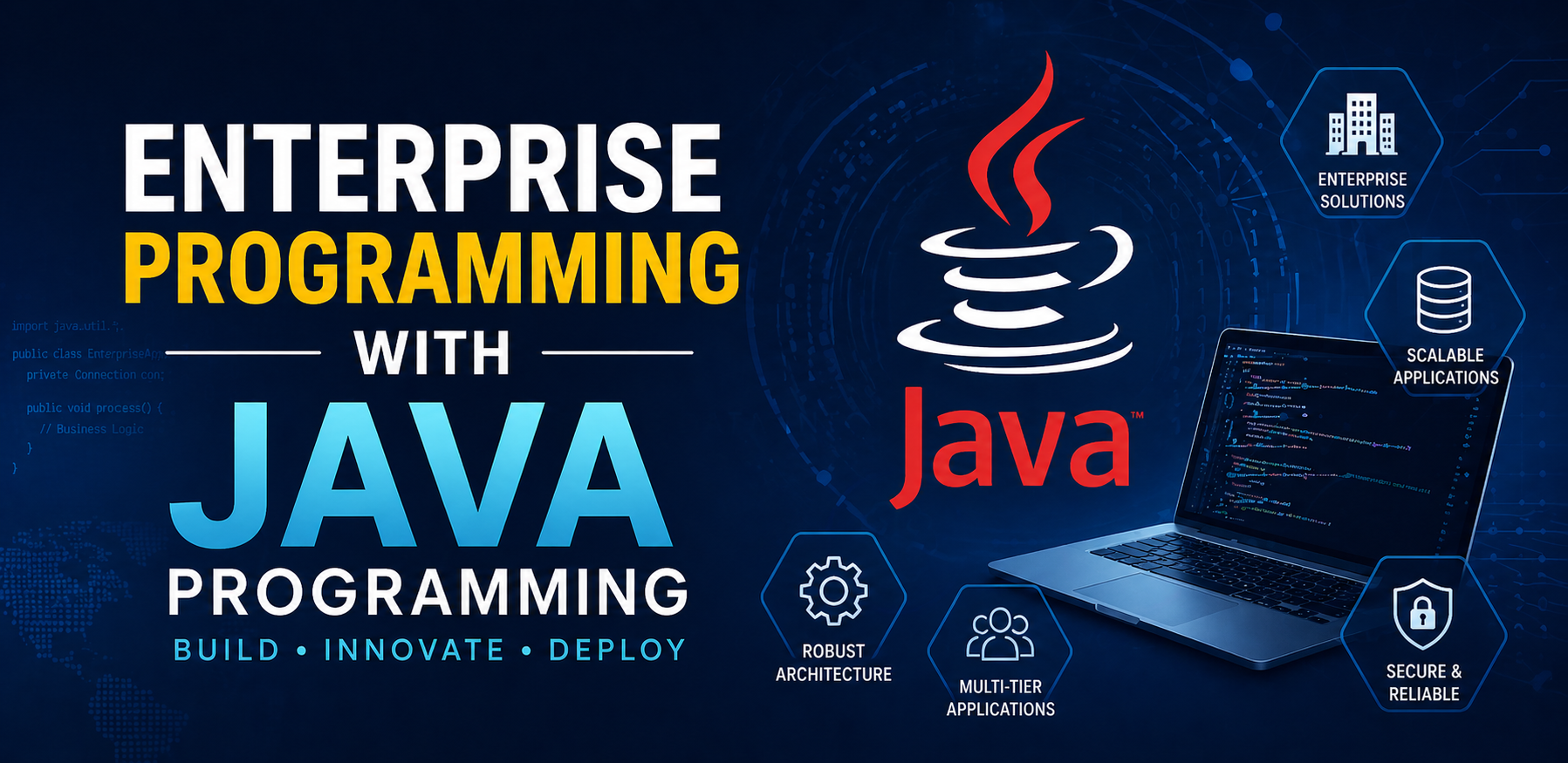
Application through the use of effective Backend Development, Multi-Tier Architecture, and Deployment Strategies for Java Technologies.
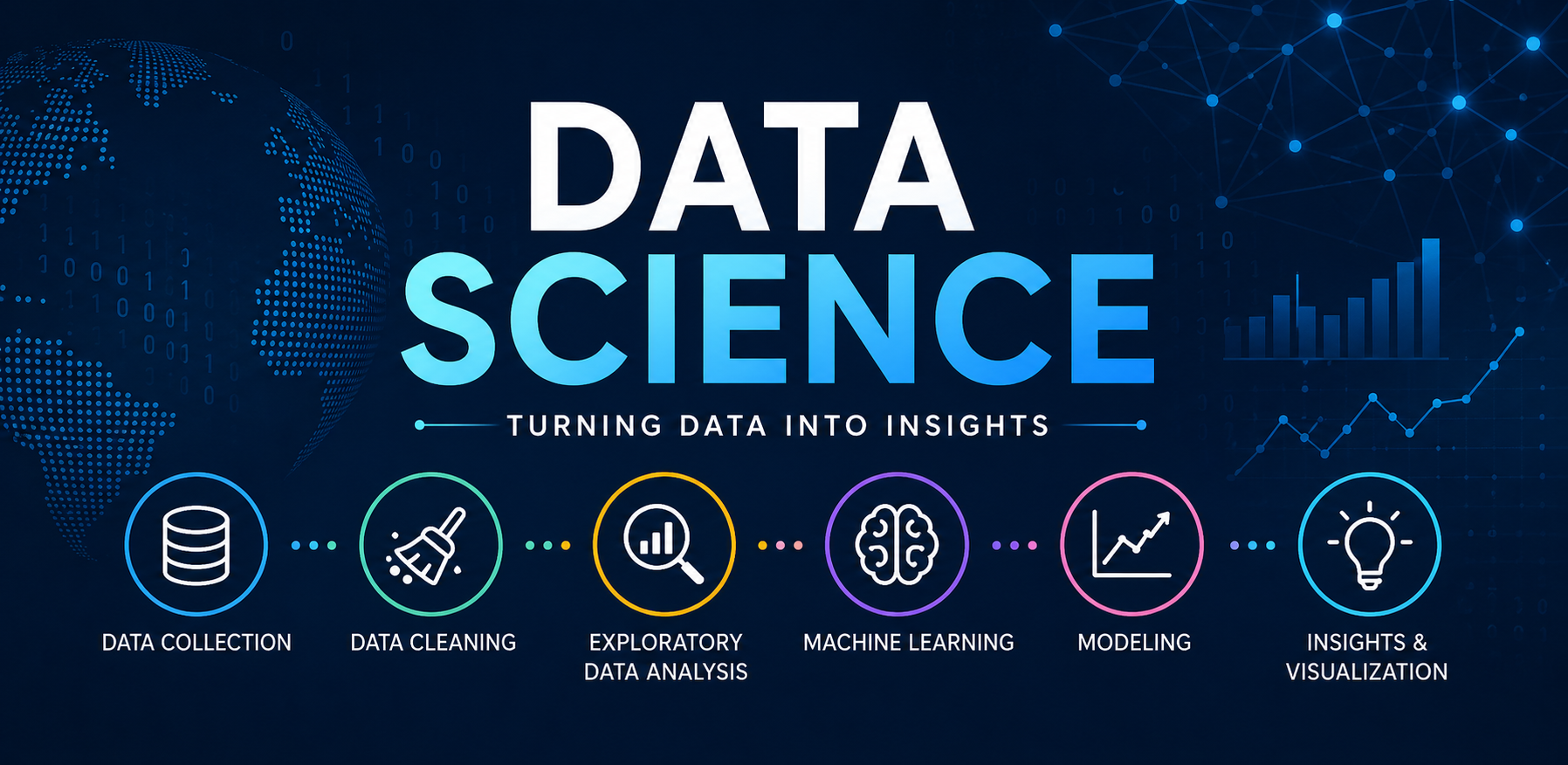
Experience the possibilities of data science such as Machine Learning, data analysis and information generation!
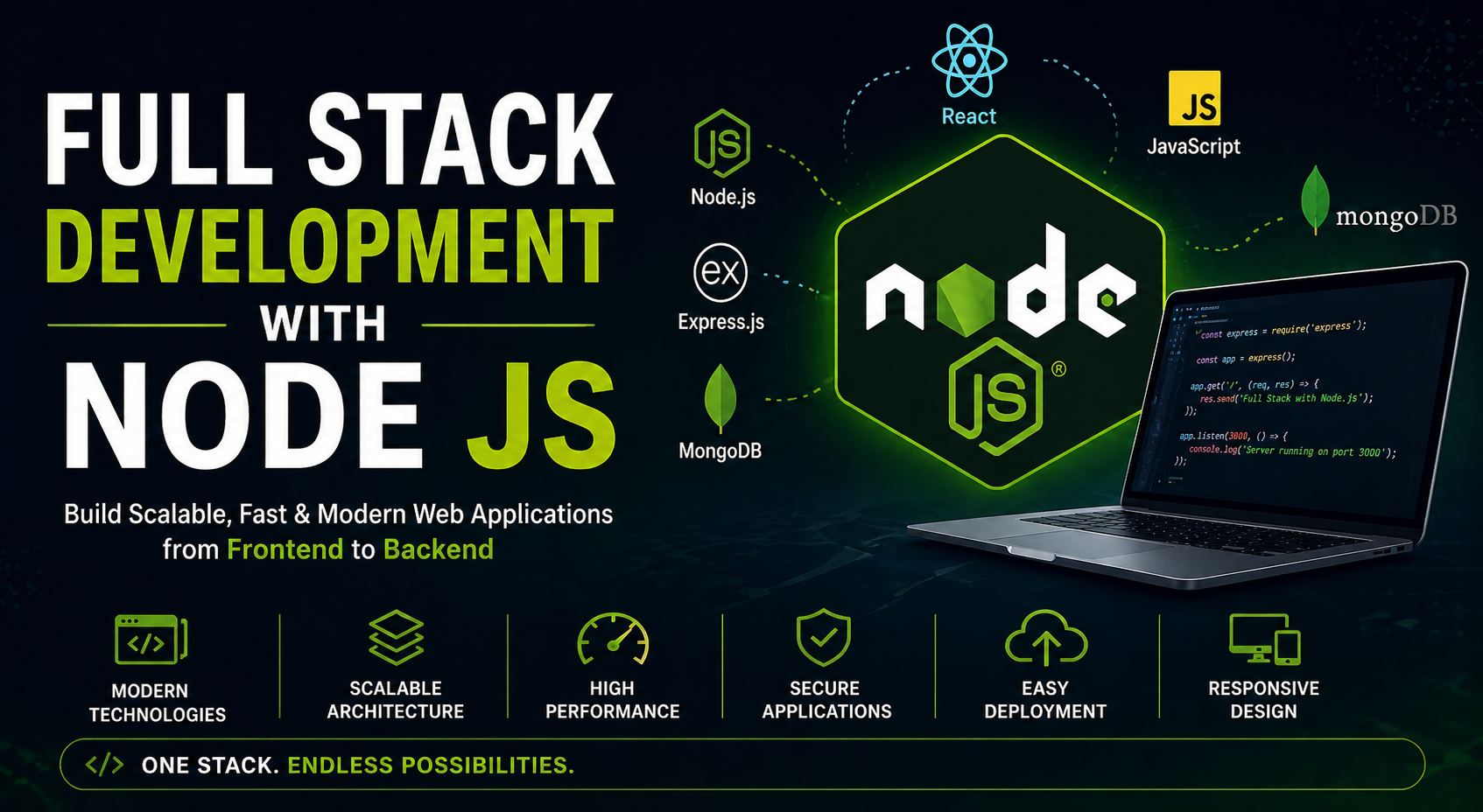
Become a master in full stack development with usage of Node.js, Express and modern front-end technologies to develop high-performance scalable applications from back end to front end.
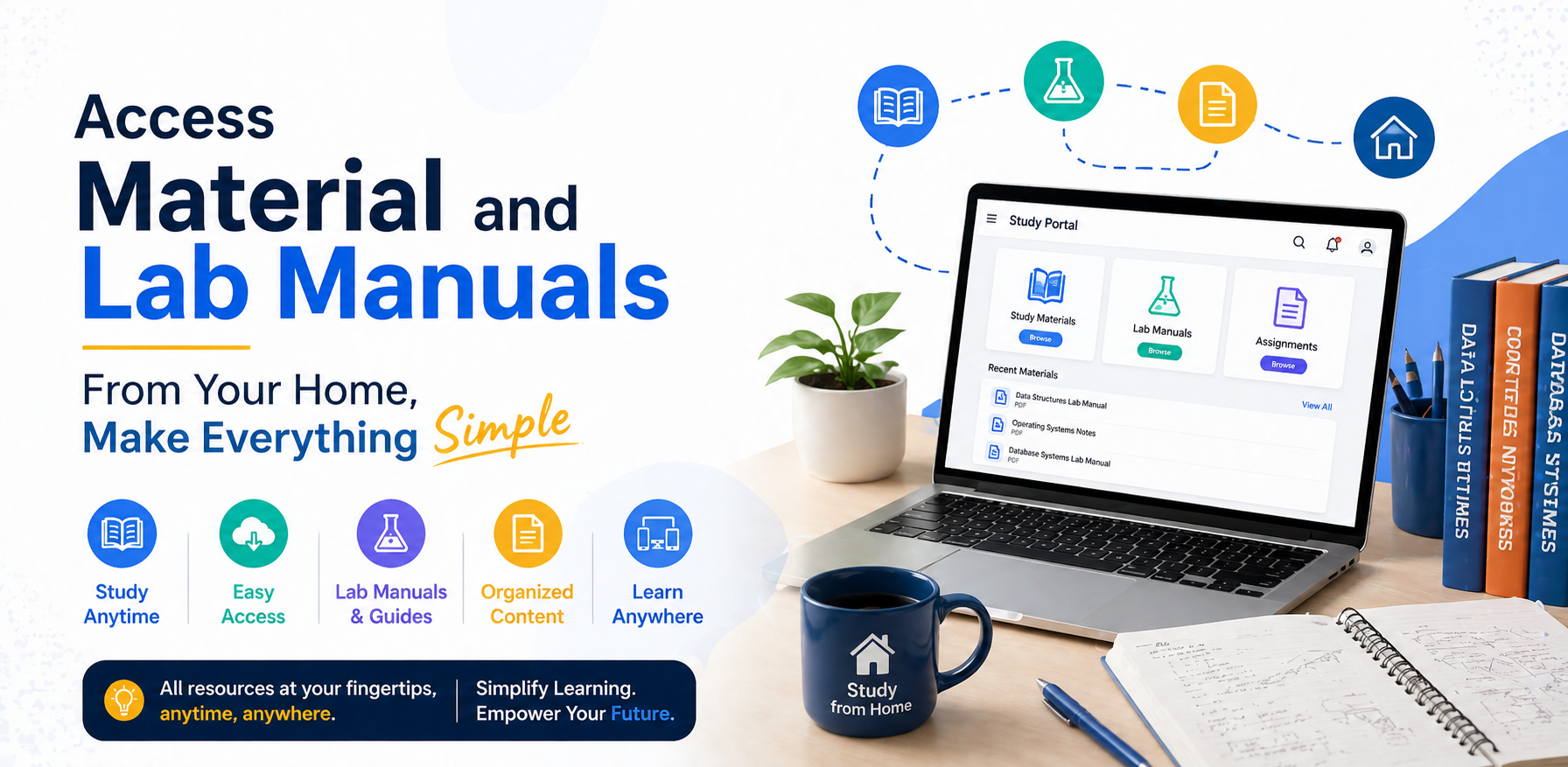
At your fingertips, you can have access to a world of study materials and laboratory manuals to make studying more accessible, structured, and available for you 24/7, anytime and anywhere.
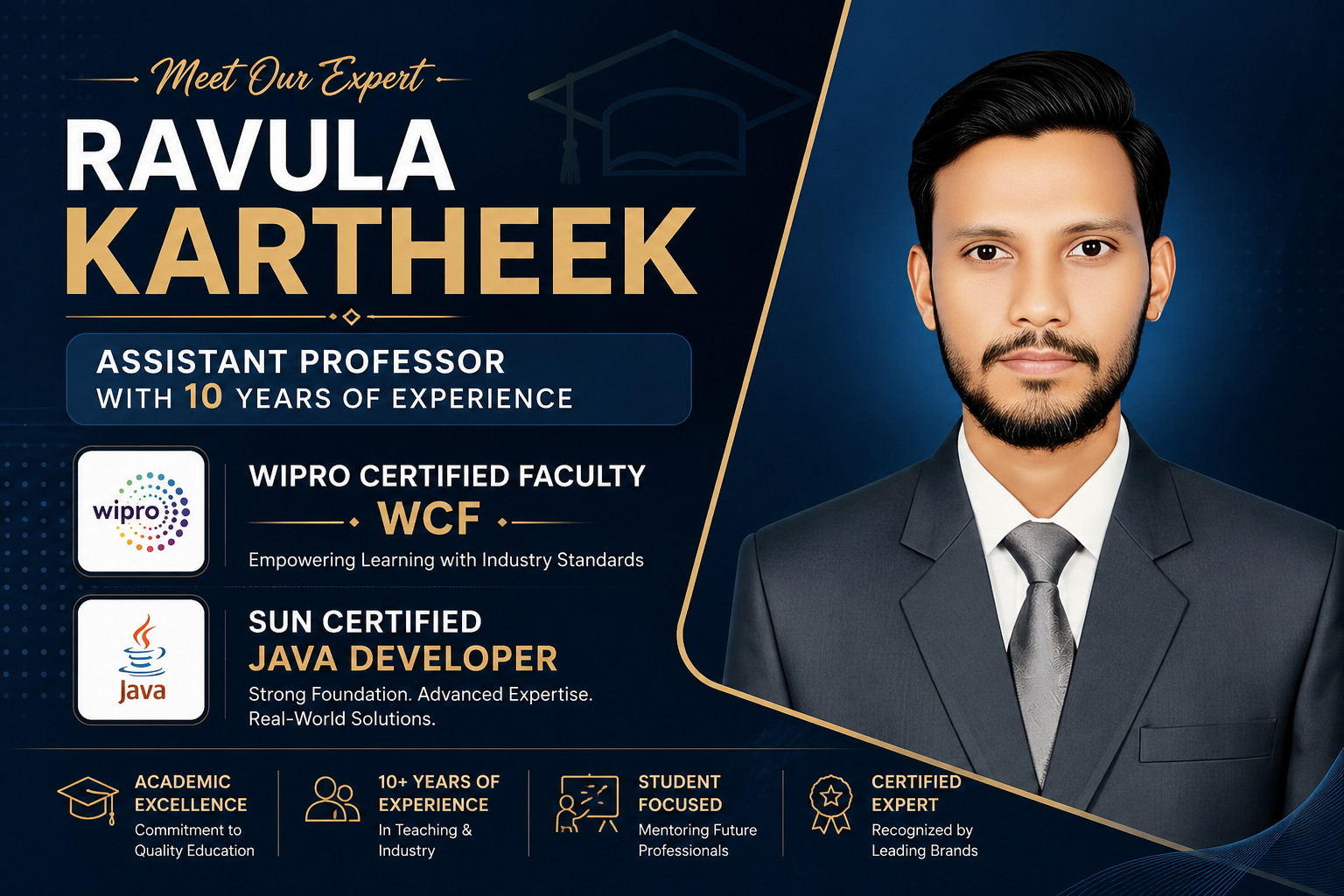
Assistant Professor with 10 years of experience. Wipro Certified Faculty (WCF) and Sun Certified Java Developer with strong expertise in enterprise and full stack technologies.
Free downloadable React JS Unit-1 study material covering JSX, components, props, state, hooks (useState, useEffect), forms, and React Router. Full PDF notes for MERN stack learners.
Gaining knowledge of Java doesn't need to be difficult. Hence, this series on Core Java was introduced to break down the study of Java into simple steps.
Anyone who is either a beginner or has been away from Core Java for a while can use this easy-to-follow series to learn Core Java in small digestible pieces.

Many Java tutorials take on too many subjects at the same time, thereby causing confusion. I have put special focus on:
This series consists of contents ranging from basic to intermediate Core Java topics:
And many other terms are provided regularly.
This series is best suited for individuals like:
Simply save a link to this blog page and visit our page daily. Each entry in this series is built around the previous one, and at the end of the series, you will understand all basic concepts of Core Java.
New Core Java concept every day. Simple explanations. Real examples. Let's make Java easy together.


This blog is about programming tutorials for total beginners, covering everything from C to Java to Python to HTML, CSS, JavaScript, React, Node.js, and other languages. The goal of this blog is to create programming tutorials that are easy-to-understand and provide coding examples and tutorials so that students, beginners, job seekers, and aspiring developers can learn the basics of programming and acquire the ability to develop robust code.
Programming is one of the most important and valuable skills to possess in the digital age. There are many potential applications for programming such as creating websites, mobile applications, software, games, and automation tools. Career opportunities in software development, data science, artificial intelligence, cybersecurity, and cloud computing are all available to programmers as well.
Here is a list of the programming tutorials available on this blog:
C Programming
You will learn about all of the core fundamentals of programming, including variable types, data types, loop types, function types, types of arrays, pointers, structures and file handling.
Java Programming
You will master the object-oriented programming concepts of classes, objects, inheritance, polymorphism, exceptions, collection types and multithreading.
Python Programming
As one of the most widely used programming languages among beginners, you will learn the basics of Python, data structures, function types, module types, object-oriented programming and real-world projects that will help you develop your programming skills.
HTML
You will learn how to structure web pages with HTML, including elements, forms, tables, multimedia, semantic tags and current best practices for HTML.
CSS
Create stunning and interactive webpages with CSS! Gain an understanding of the different types of selectors, layouts, Flexbox, Grid, animations and the various methods of responsive design.
JavaScript
Add interactivity to your webpages using JavaScript! Develop an understanding of variables, functions, manipulating the DOM, creating and using events, interacting with APIs, ES6 features and modern development methodologies.
React.js
Build fast, responsive user interfaces with React! Learn how to use components, props, state management, hooks, routing and how to work on full projects with other developers.
Node.js
Build scalable web server applications using Node.js! Learn how to use modules, Express.js, create and use APIs, create and use authentication, and understand server-side development fundamentals.
Django
Create browser-based applications using Django! Learn how to implement models, views, templates, create and use authentication and understand how to integrate with a database and deploy to a web server.
MongoDB
Understand NoSQL databases! Learn how to use CRUD on the collections/documents in a NoSQL database and how to effectively index, aggregate, and optimize a NoSQL database.
Advantages of using this tutorial
Beginners will find explanations easy to follow
Code samples provided as step-by-step examples
Real world projects to practice
Interview prep resources included
All tutorials updated on a regular basis
Free resources for learning
Who qualifies as a learner?
These tutorials are for:
Students in high school through university
People new to programming
People seeking employment and getting ready for their technical interview(s)
Programmers wanting to upgrade their knowledge and skills
Anyone who wants to gain a better understanding of coding and technology
Start your programming journey with us
Check out the tutorials we list here on this website and start coding today! Practice regularly and do actual coding work can lead to your becoming a confident developer and having a rewarding professional career in technology.

The Operating System (OS) is one of the fundamental subjects for those studying Computer Science and Information Technology and will help understand how the internal mechanisms of computers function.
This blog covers the core subject of OS with a breakdown of all the material by unit (Units 1-5), such as:
All of this information has been laid out in a structured way with accompanying PDFs to provide suitable study resources for exam review or last-minute study.
View Unit-Wise Operating System Study Material
👉 If you found the above content helpful, please follow my channel and leave a comment below!

Reinforcement Learning is a key concept of Machine Learning and Artificial Intelligence that teaches AI agents how to learn optimal behaviours based on experiences (rewards and/ or penalties) they receive as they interact with their environment.
Reinforcement Learning is a practical and useful discipline in many modern-day applications including robotics, gaming, automation, and decision-making systems. Through Reinforcement Learning, students can learn how machines develop and enhance their performance via experience.
Download well-organised Reinforcement Learning notes, unit-specific study material, and syllabi resources for engineering and data science students from the links below. All content is clearly organised to support academic learning, conceptual comprehension, and exam preparation.
To learn more about Reinforcement Learning, check out the individual unit-based notes, syllabus and PDF previews available on this dedicated page below.

For computer science students, database management systems (DBMS) is a significant topic of study. These DBMS notes will introduce you to database concepts without complicated terminology and explanations.
Find out:
- What database models and er diagrams are
- What the relational model is
- How to use SQL commands
- The differences between normalization, transaction control, and database security
All of this will be presented in a straightforward manner that is simple to understand and follow.
These notes are free for educational use. Happy learning!


Your search for Data Structure (DS) - 2-1 B.Tech handwritten notes are finally over! All Unit 1 to Unit 4 material will be here in one location for you to easily access.
There are excellent for:
- Unit 1 - Basics of Data Structures
- Unit 2 - Stacks, Queues, and Linked Lists
- Unit 3 - Trees and Graphs
- Unit 4 - Searching and Sorting Algorithms

DAA (Design and Analysis of Algorithms) is an important topic in CSE/IT field which has a huge volume of study material and notes available for students. If you’re a CSE/IT student looking for DAA notes, then you came to the right place! With just a couple of clicks, you’ll be able to preview and download all your study materials in PDF format for units 1 through 4 of this subject.
All DAA study materials listed on this website are simple, clear, and prepared with an exam focus — you’ll be able to use them as you study for exams, assignments, and viva!
👍 What You Will Get
- Unit-wise DAA notes
- Easy-to-read descriptions
- Key exam-related topics included
- Preview and direct download links are provided for all units.
📥 Units Covered
1. Unit 1 - Introduction to Algorithms
2. Unit 2 - Divide and Conquer
3. Unit 3 - Greedy Method
4. Unit 4 - Dynamic Programming

Are you prepping for your Object Oriented Programming (OOP) exam and have no idea where to find good resources? Here is a place that lets you download OOP Previous Year Question Papers from academic years 2021, 2022, 2023, 2024, and 2025 as high-quality PDFs! Great for all students in BCA, B.Tech, BSc CS, MCA, and every other computer science programme in higher education.
Studying OOP PYQs answers the following questions: What is the exam pattern of my OOP exam? How to best manage my time on test day? Am I ready for the OOP exam?
Whether preparing for internal assessments or semester finals, using OOP Previous Year Question Papers will ensure you get an ample grasp of topics covered throughout the course and recent question trends that could help increase your score at the end of the term.
⭐Why You Should Work on OOP PYQs
📥Download OOP Previous Year Question Papers (2021–2025)
Follow these links to view/download PDF versions of the OOP exam papers:
📄OOP Previous Year Question Papers 2021 PDF
(OOP Basics, Classes, Objects, Fundamentals of Inheritance).
Includes: Polymorphism, abstraction, constructors, exception handling.
Includes: Real-world OOP problems, coding-based questions.
Includes: Encapsulation, file handling, templates, OOP concepts.
Latest updated pattern, new conceptual and coding questions.
This post provides the best collection of Object Oriented Programming (OOP) Previous Year Question Papers from 2021 to 2025. Make sure to download all PDFs and practice regularly to score better in your exams.
👉 If you found this post helpful, please follow my blog and leave a comment below!

Are you interested in learning coding but don’t know how to get started? Our beginner-friendly programming tutorials will make your journey a success by breaking down each programming language (C, Java, Python, HTML, CSS, & JavaScript) into small steps!
From building apps to creating websites or automating tasks, our guides will take you from no coding to experienced coder. Start small, do a little bit of coding every day, and you will develop skills quickly!
Start learning to code today—one step at a time with C, Java, Python and many other great programming languages!
View Full Programming Tutorials